
Intervals and transitions in Double: reading distances and sequences
Understand the difference between completed interval, current absence, and percentage per row in the transition matrix.
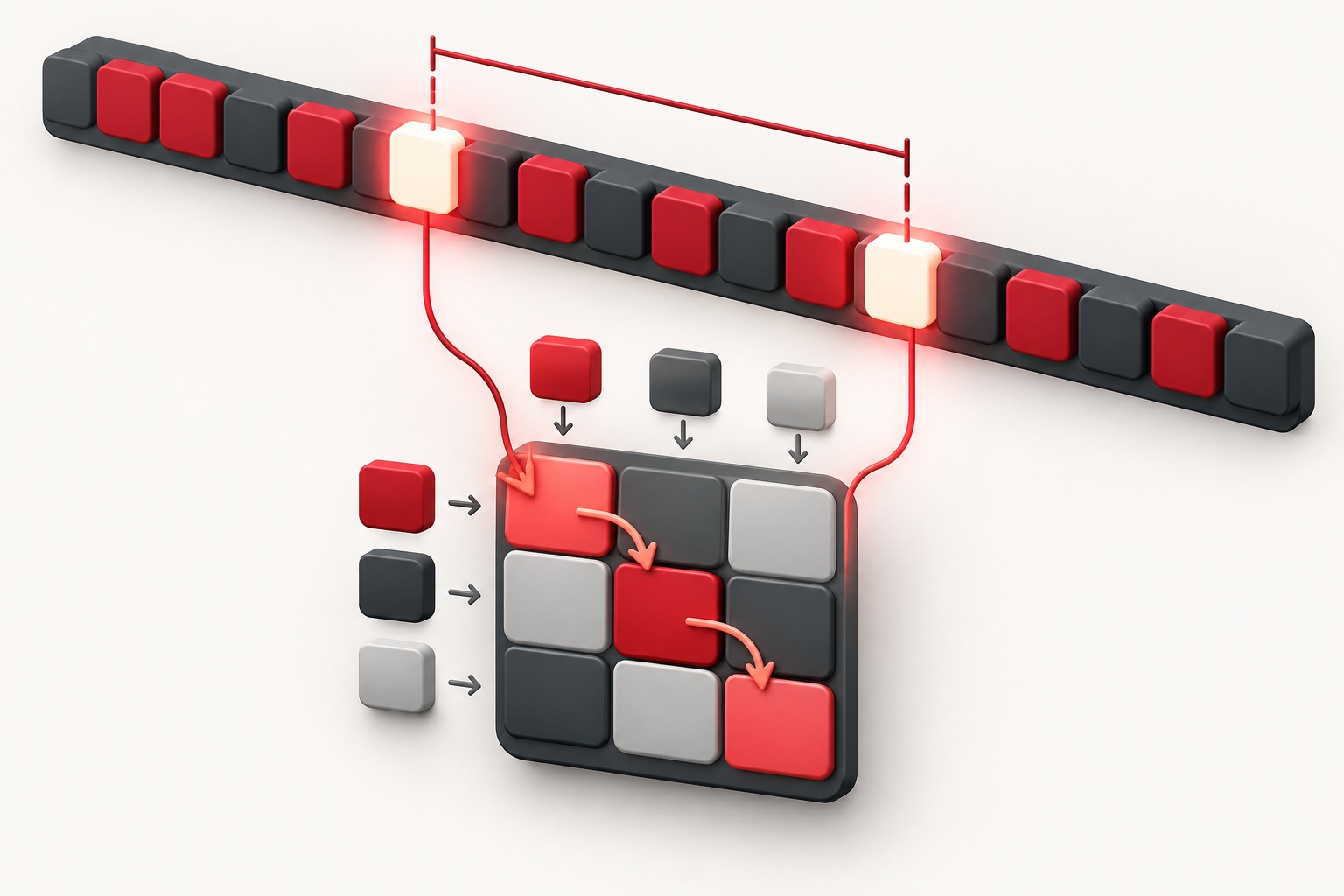
The interval, sequence, and transition panels describe relationships between sample rounds. They are found in the Double family statistics and require login. Before using them, check the continuity of the set: a color filter may precisely remove the records needed to measure distances.
Interval is not a count of pieces between the ends
In the card for intervals between whites or pandas, the distance is calculated by the difference in positions of the occurrences. Two adjacent occurrences have a distance of one round, even though there is no piece between them.
With three occurrences, there are two completed intervals. The panel summarizes the mean, median, smallest and largest distance, as well as temporal information when times are valid. The segment after the last occurrence does not yet form a new completed interval.
Read the matrix by row
The transition matrix counts consecutive pairs of recognized colors in the set. Each row represents the origin color; the columns show the next color. The percentage uses the total of the row as the denominator.
If a row has ten transitions and six go to black, the corresponding cell shows 60%. This does not mean 60% of all the rounds in the grid. Nor does it guarantee a probability for the next round.
Separate repetition, absence, and duration
A consecutive sequence describes adjacent results with a common characteristic. An absence describes how many records passed without a certain occurrence. The elapsed time depends on the times. These three measures can vary in different ways.
To reproduce a reading, save quantity, filters, times, and criteria. Loading more results may change the extremes observed and the distribution of intervals. A long interval in the past does not create an obligation for compensation in the future. Use the statistics guides to locate the panels and the lab to document a specific segment.